Saturday, 22 December 2007

Warning for Ronaldo


AC Milan vice-president Adriano Galliani has warned Ronaldo that his fitness problems are placing his future with the Rossoneri in doubt.

The Brazil striker has made just one appearance so far this season due to a succession of injuries and Galliani has hinted the club's patience is beginning to wear thin.

Ronaldo is out of contract at the San Siro at the end of the season.

"He will have to work hard to regain his place," said Galliani.

"Next year we will have six attackers. There are already five, the sixth will be Ronaldo, if he is fit.

"If not him, then there'll be another."


Source : Football.co.uk

Fifa Manager 08 (PC)


The Good

  • Wealth of official licenses
  • Deeper than ever before
  • Use of widgets and custom soundtracks
  • Adjustable difficulty levels

The Bad

  • Too many menus
  • Fewer teams than its contemporaries

While the football management genre has hit a peak of depth and realism, there's no doubt that it remains a little daunting for beginners. FIFA Manager 08 aims to fill the gap between the hardcore management simulations and such games as FIFA Soccer 08 with an approachable football management game that has many different features to distinguish it. Most notably, the 3D match engine is more visually engaging than similar features in other management games, plus the official license affords a mountain of team logos and player photos to break up the stats. This year, the game is a deeper experience than ever with revamps of the training, player interaction, and scouting elements. The game struggles to present all the information coherently if you play at the hardest difficulty, but otherwise, it's a decent, glossy alternative to other games in the genre.

FIFA Manager 08 makes an excellent first impression. British gamers, in particular, will feel a warm glow when the theme song from the Grandstand TV show kicks off the welcome screen, and high production values are evident throughout the game. As with any management title, you start by choosing the domestic or international club for which you want to work. If you choose to raise a team from the ranks of the lower divisions, you'll have fewer resources and lower expectations, but if you pick a world-class club, you'll have some very serious board expectations. However, FIFA Manager 08 helps you juggle the demands of whatever club you choose by allowing you to palm off certain aspects of the running to your assistants. If your interest is in finding and cultivating talent rather than wading through spreadsheets of numbers, then your finance team is there to take care of it. Alongside this, FIFA Manager 08 places an emphasis on creating your manager rather than being the manager. You're asked how you want to look, how big you want your family to be, and what sort of hobbies you want to pursue. Learning a foreign language will help you secure a job in another country, while playing golf may enamour you to the board members of another team.

Thankfully though, the developers have concentrated their efforts this year on improving the core game. There's now a greater emphasis on player scouting, training, and motivation to the point that the game feels completely refocussed on the players themselves. Aside from short-term considerations, such as swapping substitutes or allowing talent to flow from your youth team, you also need to cultivate star players by giving them pep talks--and not just during matches.

While FIFA Manager 08 does a great job of easing you in, the interface can get messy very quickly as you activate the more advanced options. While it can go spectacularly in-depth compared to last year's relatively shallow offering, the resulting interface clutter needs to be addressed. There are some useful additions for all players, though, such as the widget system that provides you with access to everything from a notepad to an MP3 player in-game.

Training schedules can now be specified for each individual player and the overall team; thus, making small changes can have a dramatic result on performance. The transfer system now works in a much more realistic manner, with more in-depth negotiation between clubs and players, while the scouting element is a minigame in itself. Foreign player statistics are now hidden by default, and it's only when you send your scout to the region that you can differentiate from one player to the next.

FIFA Manager 08's 3D match engine is something that sets it apart from other games in the genre. Traditionally, matches have often been re-created using a mixture of text-based commentary and a 2D engine to represent the players. This leaves more to the player's imagination while the computer is spared more resources to compute likely scenarios. While FIFA Manager 08's match engine presents a watchable game of football, it doesn't make the job of management any easier. The game does allow you to play as one player on the pitch if you want to, but the lack of overall control means it's more frustrating than helpful.

If you're a football fan, then you'll really get something out of the official licences. They permeate the game, with a customised menu screen depending on the team you play, as well as mountains of up-to-date player photos and stats for the majority of major teams. The licensing even stretches to official newspaper reports from such publications as The Sun, something that really taps into the wider aspects of football. While the number of teams can't touch that of Football Manager, the game still covers the major world clubs. It also now includes more English and Spanish leagues than before.

It's clear that Bright Future has worked hard on updating and expanding its football management sim. While it's not quite in the Premier League yet, there's plenty here for fans to enjoy. It's a tremendously deep game that also manages to be welcoming to the novice while the official licenses and overall polish will delight both types of player. Those playing at the advanced level are unlikely to feel hamstrung by limited options this time around, but the way that all the information is presented could definitely do with some work for next year. Most importantly, the game carves out its own niche in the football management market, and although this time it falls short of greatness, it shows plenty of promise for the future.


Source : Gamespot.com

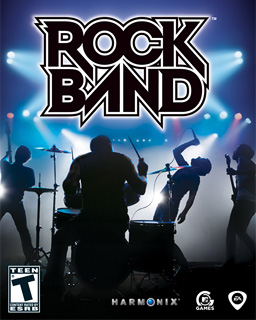
Rock Band (Multi Platform)


The Good

  • As party games go, this one tops the charts
  • Included hardware is a lot of fun to play with
  • Band world tour mode is severely addictive
  • Fantastic presentation
  • This game will probably make you a better drummer.

The Bad

  • $170 price is a lot of money
  • Band world tour can't be played online
  • Some hardware reliability concerns.

Rock Band is every wannabe musician's dream. A game that takes the four key instruments one needs to make a band a rock band (guitar, bass, drums, vocals), and builds a highly playable and intensely addictive game around them. To a degree, developer Harmonix got a head start on the process of creating Rock Band when it developed the first two Guitar Hero games, but whereas those games were all about the decidedly solo act of severe simulated shredding, Rock Band goes in an entirely different direction. The solo play has taken a backseat to cooperative multiplayer. This game is all about the act of performance as a band, getting a group of four people together and working together to get the highest score bonuses possible as a group, all while fake guitaring and realistically singing and drumming your way through more than 40 different licensed rock hits. The steep $170 price tag for the game and bundled hardware might prove to be a barrier for entry for some, and in addition, the hardware itself comes with a few flaws. But if you're willing to make the investment, Rock Band is a guaranteed good time for any music lover, and one of the best party games you'll ever play.

In a sense, Rock Band is a little like three distinct games built into one. First, there's the guitar game, which lets you play approximately the same sort of game as Guitar Hero on guitar and bass, but with a few key differences. For one, the guitar itself is built quite differently from the Guitar Hero guitars. It's bigger, with a longer neck, and its body feels more solid. The fret buttons are larger, and are flush against the neck of the guitar, and there is a second set of narrower fret buttons all the way down the neck that you can tap on for solos. The guitar even comes with a built-in effects switcher, which puts effects like echo, flange, and wah-wah over the in-game guitar track. The only difference between guitars in the Xbox 360 and PlayStation 3 versions of the game is the fact that people who buy the 360 version get a wired guitar, whereas PS3 owners get a wireless one. On the flip side, PS3 owners don't get a USB hub to connect all the instruments to, whereas 360 owners do. That shouldn't be an issue if you have an older PS3, but if you have a newer one with the two USB ports, you'll need to buy one of those hubs separately. It's also worth noting that you only get one guitar with the bundle on either platform, but if you own a Guitar Hero guitar for the 360, you can use it with the 360 version of Rock Band.

The actual guitar gameplay isn't much different from Guitar Hero, with you strumming along and periodically tilting the guitar to engage "overdrive" (the game's equivalent of star power), but a couple of neat twists do add some flavor. For one thing, solos are given their own scoring section in each song, and the game tracks the percentage of notes hit during a solo. The higher the percentage, the higher the score bonus you get at the end of the solo.

The guitar game is of good quality, though a couple of things about it might drive a few longtime Guitar Hero fans batty. For one, the difficulty of the game is a good deal less challenging than what the hardcore Guitar Hero fan base is probably accustomed to at this point. The goal with Rock Band seems to be more about bringing in newcomers, so as a result, the difficulty level sits somewhere between Guitar Hero and Guitar Hero II overall. Not a bad thing if Guitar Hero III gave you conniption fits, but potentially less exciting for some of the hardcore guitar gamers out there. Also of note is that the note charts for guitar are handled a bit differently, with notes that can be pulled off via hammer-ons and pull-offs appearing as half-sized notes on the chart. It's not quite as easy to see these notes as in, say, Guitar Hero III, so you might end up screwing up a few solos until you get used to this new methodology.

Lastly is the guitar itself. It's a good guitar, but it does some things differently than the standard GH model guitars. The strummer doesn't click when you strum up or down, and the fret buttons seem a bit less forgiving in terms of timing in solos and other, tougher sections. It's not that it's bad or wrong--it's just different, and it takes some getting used to. Also, you're not going to get a ton of mileage out of things like the second set of buttons and the effects switch. Most people will probably forget the switch is even there until they accidentally turn on wah-wah, and sliding down to the second button set is a bit vexing to do just as you're about to head straight into a solo, since it takes a while to get accustomed both to the smaller buttons and to finding exactly where they are on the neck without staring at the guitar for a few seconds. Fake-guitar virtuosos will probably dig it, but most people will likely stick to the standard method.

Next there's the singing game, which closely emulates the mechanics of Karaoke Revolution and SingStar, but, again, with a couple of specific differences. You sing along as the lyrics display on the screen, trying to match your vocal pitch to the meter that moves up and down with the original vocal track. The key thing about singing is that the number of sections where a singer actually gets to do his or her thing is somewhat limited. But even those down moments aren't left for pure silence. Sometimes the vocal area of the screen will turn yellow, indicating for you to "make some noise," which then engages overdrive. There are also sections where you can simply tap the microphone to the rhythm of the song to get a tambourine or cowbell section going.

Mass Efect (X360)


The Good

  • Powerful storyline draws you into a tense, politically charged universe
  • Dialogue options will keep you constantly engaged in your missions
  • Great visuals and superb voice acting
  • Biotic powers are fun to pull off in battle.

The Bad

  • Vehicle navigation and combat are weak
  • A bunch of annoying interface issues.

Developer BioWare has always been at the forefront of progressive storytelling in games, so it's no surprise that Mass Effect's story is one of its best yet. It's got a unique take on the chase-the-bad-guy-across-the-universe plot, and just when you think you've got everything figured out, the game throws you yet another surprise. BioWare has created a politically charged universe with an exhaustive backstory and filled it with a bunch of interesting, multifaceted characters. Combined with an exciting and unique combat mechanic, it makes for a fun and absorbing experience that you'll want to see through to the end, just to see how everything turns out--even if the game isn't perfect by any means. In fact, it's surprising that so many small annoyances and glitches made their way into a game of such general high quality. Still, most players will be able to look past them and enjoy Mass Effect for what it is: A terrific role-playing game with great production values and fun, exciting action.

As in most role-playing games of this nature, you begin by customizing an avatar. You play as Commander Shepard, potential savior of the galaxy, but there's plenty of room to mold him or her as you see fit. Physical customization isn't as deep as you'll find in something like last year's Oblivion, but the system is relatively robust, letting you choose from a variety of preset features, and even letting you round everything off with a scar. Shouldn't every badass commander have one? Of course, you'll also choose a class. In this case, you've got six to choose from, each with various strengths in combat, tech, and biotics (Mass Effect's sci-fi equivalent of magic). More impressively, you will select a few autobiographical tidbits--and these choices aren't just for show. Through the course of the game, characters will refer to your past, and your resulting dialogue options will allow you to react to their comments with various degrees of humility, wistfulness, and scorn.

The narrative is pure space opera, yet there's no denying that BioWare has created a tale of surprising depth and appeal. Surprise number one: Humanity is not the political center of the universe. We don't have a seat on the galactic council, or even a representative on the Spectre squad, an elite group of special forces whose members are given wide berth to solve political and military challenges as they see fit. In the meantime, a Spectre has gone rogue, ransacking ancient artifacts and unleashing the violent, robotic Geth race on an unsuspecting galaxy. As Shepard, you pursue him across the Milky Way, visiting one alien world after another and discovering the fallen Spectre's intentions along the way. He isn't the best villain ever created: He disappears for the bulk of the game, which makes finding him feel less urgent than it should. Still, the journey to the game's exciting end is one worth taking.

In true BioWare fashion, you'll be navigating through loads of dialogue trees throughout the game, and how you respond can have life-or-death consequences--though you shouldn't take that to mean that you need to brood over every decision. Oftentimes, multiple choices have the same result, a somewhat transparent trick that makes it seem as though you have a lot more impact on the conversation than you really do. At important junctures, however, your decisions can affect how missions play out. You can turn friend to foe, console (or devastate) a suicide-attack victim, or exploit evil corporate executives for fun and profit. And it all plays out amid an intricate melodrama of political intrigue and racial prejudice, and in a galaxy populated by fascinating, complex characters. There are pages ripped from the Star Wars and Star Trek playbooks, certainly, but quirks such as the interesting speech patterns of the overly-formal Hanar alien race, or the nomadic structure of the Quarian flotilla--a galactic government that's always on the move--make Mass Effect's version of the Milky Way a unique one.

When navigating dialogue, you'll also be earning paragon or renegade points, which is the usual light-versus-dark system we've come to expect from the developer. Unlike in Knights of the Old Republic, however, your decisions here will not affect any abilities you have. However, the intricate relationship between the story and the game proper means that these decisions still affect gameplay--though that effect is usually an indirect one. More interestingly, your paragon and renegade meters are separate, rather than being at opposite sides of a single spectrum. It's a subtle but effective choice that lends itself to Mass Effect's shades-of-gray fiction, where light and dark aren't mutually exclusive.

The main quest starts you on a huge space station called the Citadel, but takes you across a small series of planets before reaching the game's exciting final moments. Not that you're stuck with the main story, since you can pick up a good number of side quests along the way. Some of them are simple and relatively self-contained, while others will send you across the galaxy to uncivilized planets and derelict spaceships. This involves bringing up your galactic map, selecting a destination system, and going planetside to kick some alien butt. There are multiple regions to choose from, and often multiple solar systems within them, but while that sounds intimidating, it's not nearly as mind-bogglingly huge as you would expect. In any given system, you can usually only land on one planet--and on each of these planets, there are usually only a few things to do before you get to your destination. More surprisingly, once you've finished the mission, there's never a reason to return. Aside from the annoying thresher maws (more on these later), there aren't any hostile indigenous creatures, so once you've dispatched your foes and scavenged for loot, it's time to move on.

When you first land on a planet, you drive around in a rover called the Mako. The thing's possibly the most resilient vehicle ever created in a game. You get dropped onto the surface from hundreds of feet in the air and drive up impossibly steep mountains without much difficulty. Too bad that the driving portions are undoubtedly the weakest of the game. The weird bouncy nature of the rover and the fact that gravity is the same on every world (even Earth's own moon) are both suspect issues, though they don't really affect gameplay.

The rocky planetary design and Mako combat mechanics can really be a downer when combined together. You can spray machine gun fire or launch shells at your foes, and it works fine, provided you are on the same level as your enemies. However, the Mako's turret, for whatever reason, can't move up or down. The result is that bullets don't necessarily land where your crosshair is, so if you're on higher terrain or your target is too close, those endless clips you're unloading are useless (though you can hit enemies above you without difficulty). It's sometimes maddening, since in many situations, the enemy base is nestled below you in a crevasse, and you're forced to either get in closer (often a death sentence in an area swarming with tough foes like the robotic Geth colossi), or get out and try to take on the toughest foes of the game on foot. Be careful if you get out of the Mako in areas like these though, since your adventuring party can slide into a deep valley and get stuck very easily, which forces you to either return to the Normandy (your ship) and return to the planet, or reload a saved game.

The other issue here is with the aforementioned thresher maws, which are sandworm-like beings that burst from the ground, spew deadly goo at you, submerge, and emerge elsewhere. These encounters can be really exciting, since the things are tough to take down and keep you on the move. The problem is that the game doesn't check on the Mako's position before respawning the thresher maw. Multiple times, we had the creature emerge from directly underneath us, which either resulted in an unavoidable insta-kill or getting stuck in the thresher's geometry while the camera jittered madly. That's just not fun, and you will find yourself avoiding flat expanses on planets just to avoid these problems.


Source : Gamespot.com

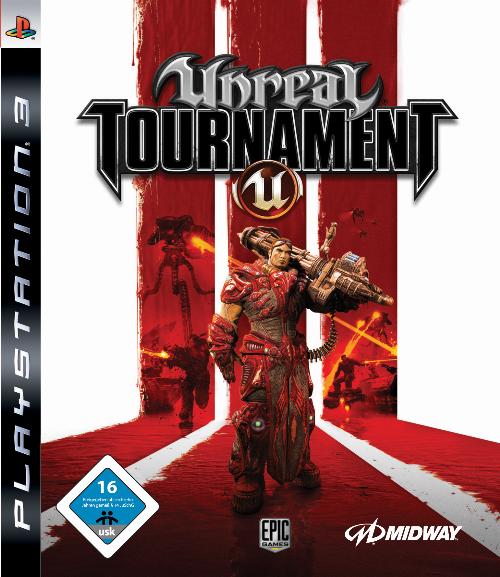
Unreal Tournament 3 (PS3)


The Good

  • Exhilarating shooting action
  • A number of high-quality modes to choose from, including the intense warfare mode
  • Great map design encourages early, exciting action
  • Fantastic visuals that generally run at a consistently smooth frame rate.

The Bad

  • Some occasional performance and lag issues
  • User-created content options not yet implemented.

The Unreal franchise has had a comfortable home on the PC for many years. On the other hand, Unreal Tournament 3 is the first game from the franchise to hit a Sony console since the original Unreal Tournament landed on the PlayStation 2 in 2000. PlayStation 3 owners will be thrilled to hear that this version of UT3 is for the most part everything the PC version was when it was released in November. Aside from some online hiccups, it is fast, furious, and fun to play, and never fails to impress from a visual perspective. As a result, it stands up favorably against the other strong multiplayer shooters available on the platform.

There are a number of good ways to play Unreal Tournament 3. If you are new to the series, you'll probably want to start with the campaign. Rather than the traditional single-player mode you're used to, you'll fight against computer opponents in a series of matches that are bundled into an inconsequential story and basically meant to prepare you for the online portion of the game. You can also play against bots on the multiplayer maps, though the meat of the experience is found online, where you can compete against up to 15 others. There are several modes available: traditional deathmatch and team deathmatch; a one-on-one deathmatch mode called duel; capture the flag, with and without vehicles; and warfare mode, in which two teams compete to destroy each other's power core. From a content perspective, the PlayStation 3 version is identical to its PC counterpart. For more information on what that gameplay entails, you should read our PC Review of Unreal Tournament 3.

Of course, there are some technical differences between the two versions, despite the fact that the gameplay experience is essentially the same. On the visual side of things, the PS3 version looks absolutely fantastic and features high-quality character and weapon models, detailed textures, and great lighting and shadow effects. As a rule, it runs at a fairly speedy clip throughout, with some occasional slowdown only when there are a lot of effects onscreen at a given time, though it doesn't happen enough to be annoying. For the most part, our online matches tended to be free of frustrating lag, provided that we chose servers with a low ping. However, this wasn't always the case. Even in dedicated servers, we encountered moments of noticeable lag. Likewise, even when things were running smoothly, we often found that there were noticeable delays when cycling through weapons. This was not common, and most matches were smooth, hitch-free experiences, but it's an issue worth noting--particularly when there are rather few servers available at any given moment. The game supports voice chat as well, and we used both USB and Bluetooth headsets with no noticeable problems.

You should also note that you can play with a mouse and keyboard on the PS3, which works reasonably well, though these controls don't feel as responsive here as they do on the PC. Thankfully, the Sixaxis controller does a great job of keeping up, and the control mappings are intuitive. You can also choose to filter out games that allow mouse and keyboard controls, so you needn't worry about those players having an unfair advantage in a given match. There is also room for modders and map makers to create downloadable maps, though the tools to create PS3 content have yet to be released, so there isn't any user-created content available as of this writing.

What's most impressive about Unreal Tournament 3 on the PS3 is how at-home it feels on the platform. The visuals look great and keep up splendidly, and the action is intense and satisfying. Even with such fantastic options as Warhawk and Call of Duty 4 at your disposal, UT3 is worth a purchase for anyone who likes to shoot guns in video games.


Source : Gamespot.com